Chicken Parmesan Casserole

Chicken Parm Cass1

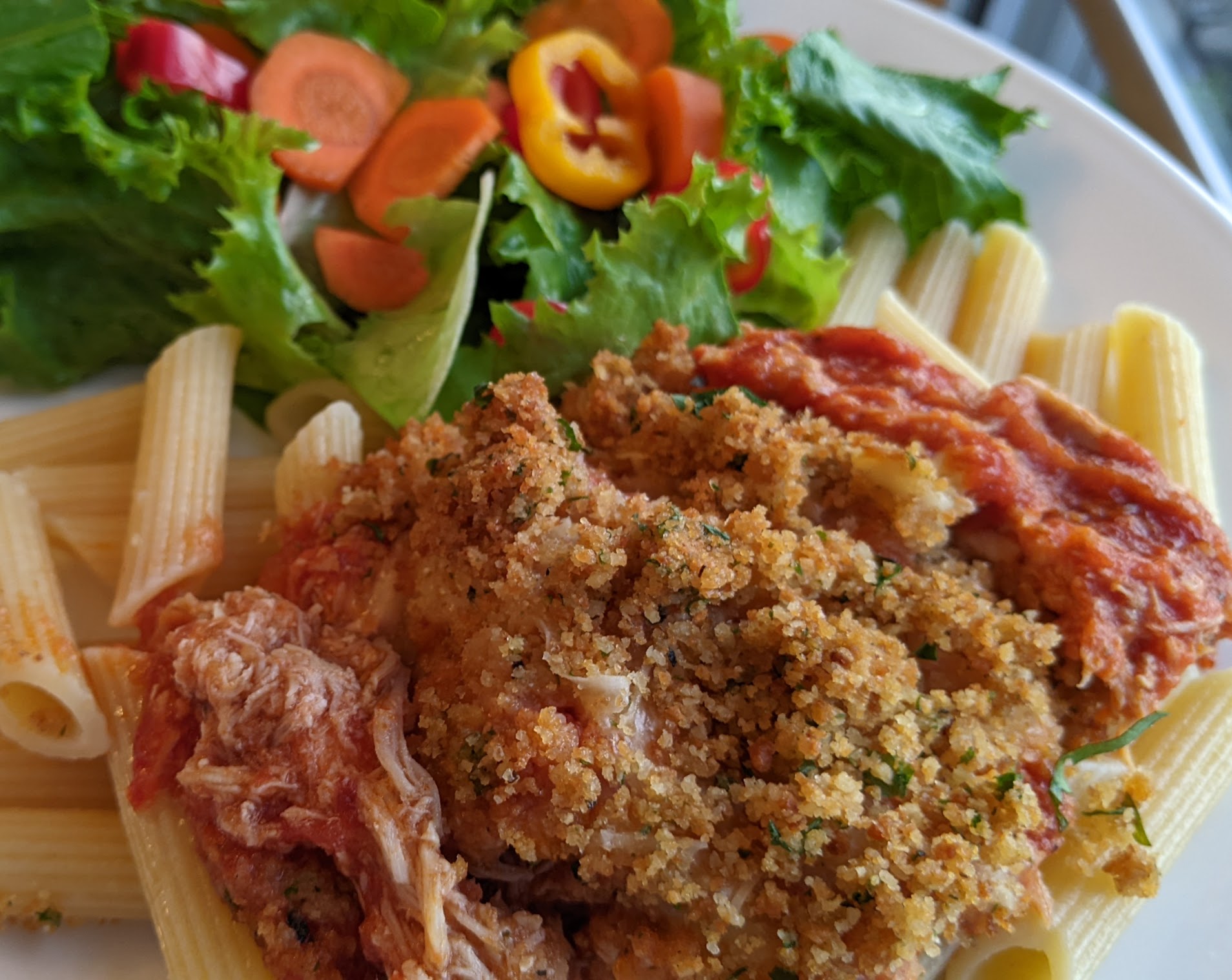
This is one of the easiest and most-loved recipes in our home. It’s usually the birthday dinner meal request of at least one of my kids. It’s freezer friendly too, which makes doubling the recipe a cinch.

Chicken Parmesan Casserole

  • Servings: 12 Servings
  • Difficulty: Easy
  • Print

Ingredients

Chicken Parmesan Casserole:Chicken Parm Cass2

  • 2 lbs fully cooked chicken, shredded (about 5-6 cups)
  • 1 24oz jar marinara sauce
  • 1 cup shredded parmesan cheese
  • 1 cup shredded mozzarella cheese
  • 1 cup gluten-free Italian breadcrumbs (I like Aleias or Ians brands)
  • 2 Tbsp olive oil
  • 2 Tbsp chopped fresh parsley (or 2 tsp dried parsley)
  • Salt and pepper

Penne Noodles:

  • 1 box gluten-free penne noodles (Rummo brand is the best!)- Cook according to instructions on the label, al dente.

Directions

Preheat oven to 350F. In a 9×13 casserole dish, place fully-cooked, shredded chicken in the bottom. Pour the marinara sauce over the chicken and mix well. Top with a layer of parmesan and mozzarella cheeses until the chicken is covered. 

In a small bowl, stir together breadcrumbs, olive oil, parsley, salt and pepper. Sprinkle the breadcrumbs on top of the cheese.

Bake for 25 minutes until the cheese and breadcrumbs turn golden brown on top, and sauce is bubbling on the sides.

Serve over cooked Penne noodles and a side salad. Enjoy!

Photos and Content Copyright © Jaclyn Beaty Nutrition, 2024


Sausage Kale Soup

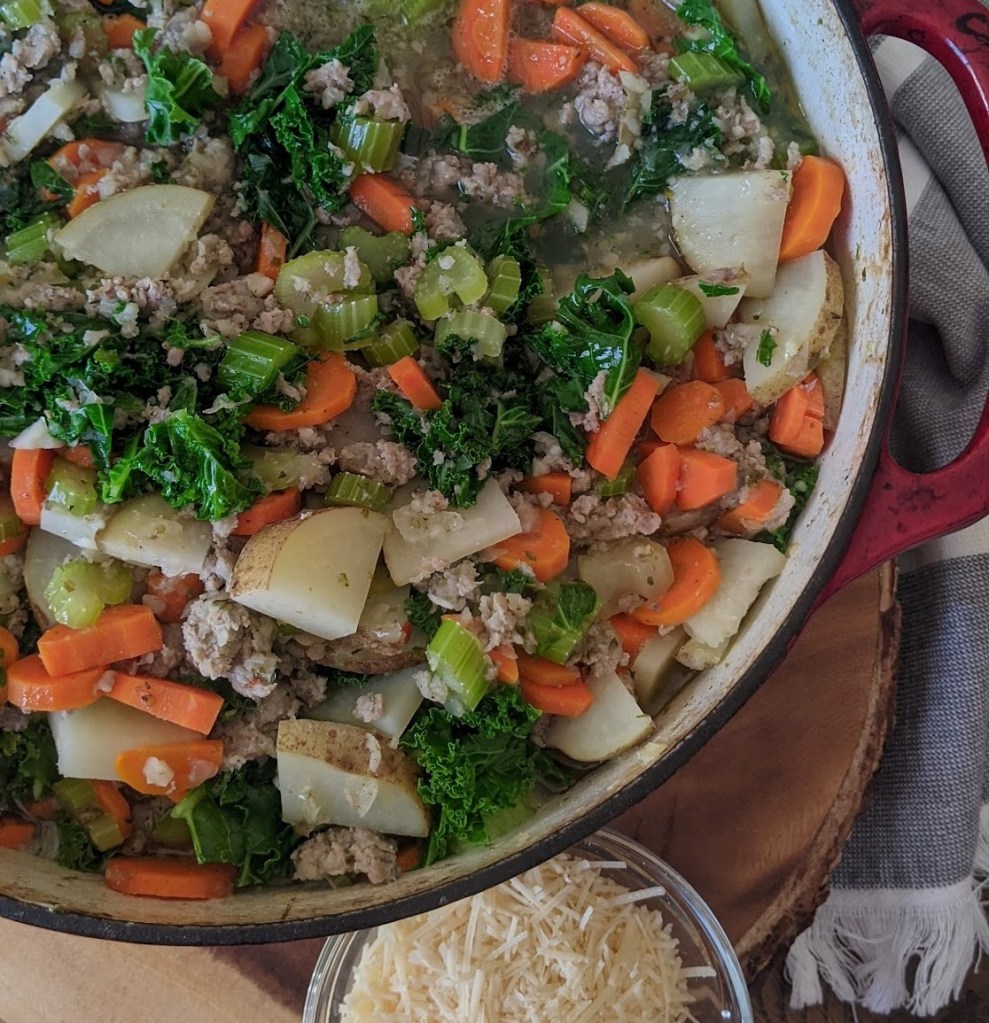
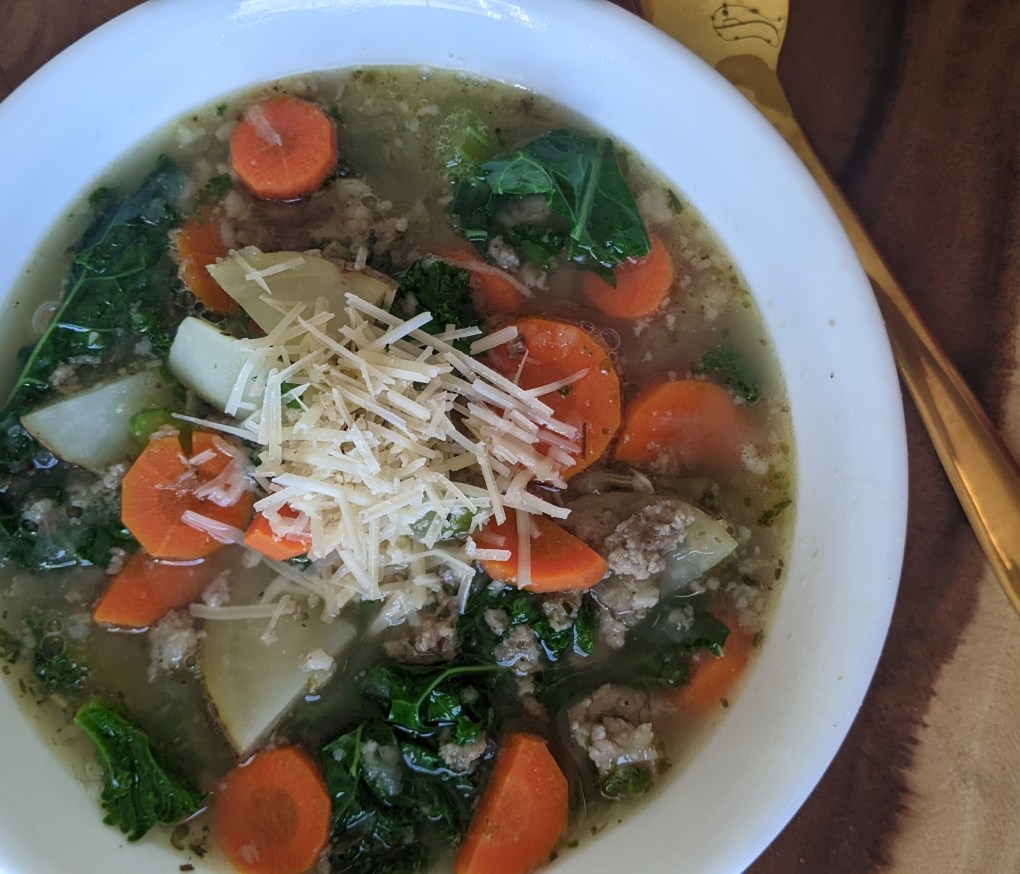
This Sausage Kale Soup is my favorite fall go-to meal. The soup is a perfect dinner for cold nights, and it serves a lot so we’re always able to invite an extra guest to our table. It’s healthy, hearty, and flavorful.

Sausage Kale Soup

  • Servings: 16 Servings
  • Difficulty: Easy
  • Print

Ingredients

Sausage Kale Soup

  • 3 Tablespoons olive oil
  • 1 large yellow onion, chopped
  • 1 lb Italian or mild pork sausage, pastured and MSG free
  • 4 garlic cloves, minced
  • 4 celery stalks, chopped
  • 4 carrots, sliced in coins
  • 1 Tablespoon Italian seasoning
  • 1/4 tsp dried red pepper flakes
  • 10 cups chicken broth
  • 2 cups sliced white potatoes (skin on!)
  • 2 cups kale, chopped
  • Salt and pepper to taste
  • Shredded parmesan cheese (optional)

Directions

Heat olive oil in a large pot or Dutch oven over medium-high heat. Sauté onion until translucent and golden brown. Add the sausage and cook until browned, about 5-7 minutes.

Add garlic, celery, carrots, Italian seasoning and red pepper flakes. Sauté until the veggies are tender, about 5 minutes.

Add chicken broth and sliced potatoes. Bring to a boil and simmer for 15 minutes. Once potatoes can be easily pierced with a fork, stir in the chopped kale. Continue to simmer for 5 more minutes until kale has turned vibrant green and slightly tender.

Serve each bowl of soup with parmesan cheese sprinkled on top and a slice of warm sourdough. Enjoy!

Photos and Content Copyright © Jaclyn Beaty Nutrition, 2022


Brainiac Bites

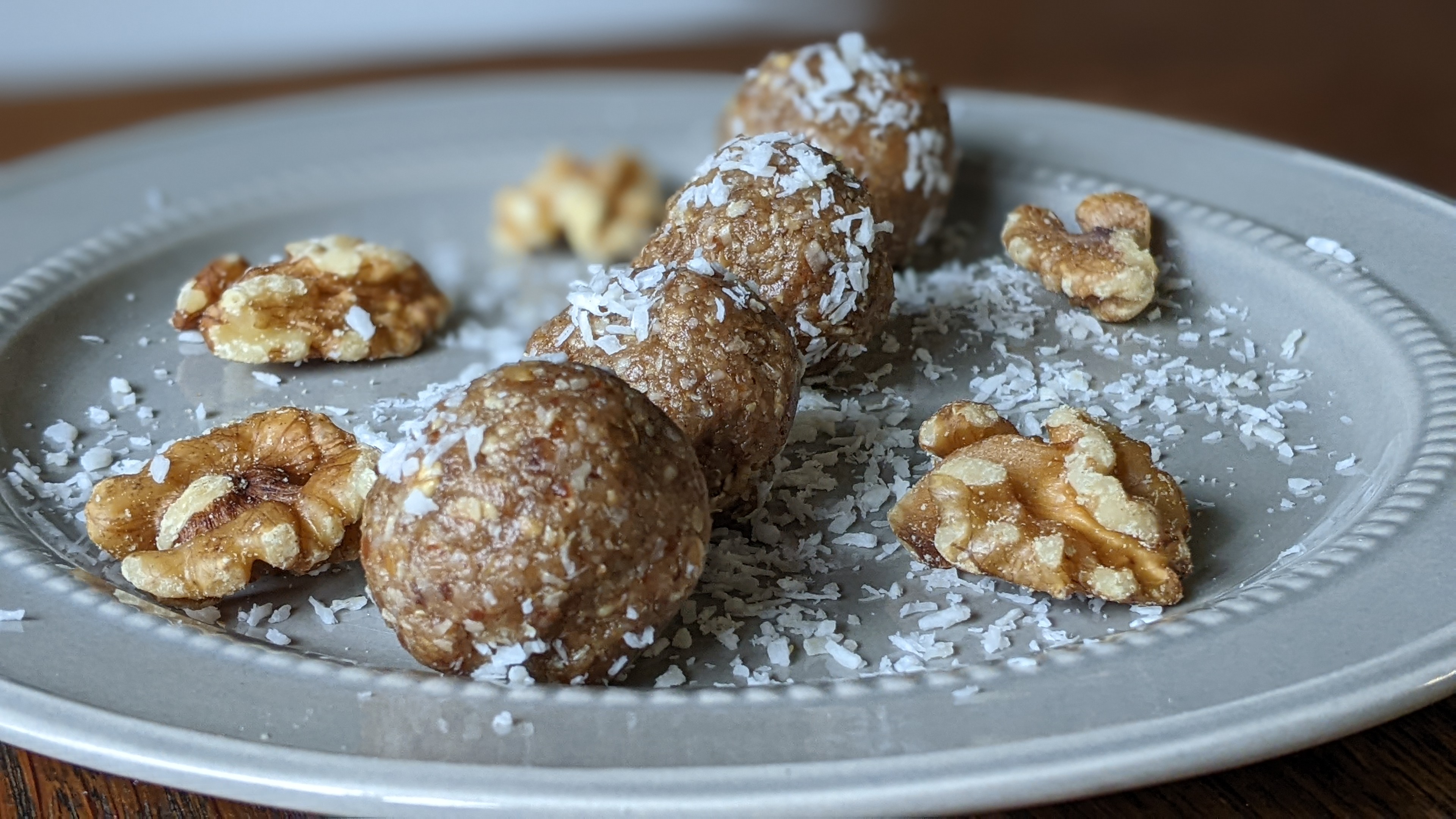
These Autism-friendly, kid-approved energy bites are a quick and nutritious snack. Healthy omega 3 fats from walnuts and flaxseed fuel the brain to support attention and cognition. Fiber from oats and raisins support healthy blood sugar balance and digestive movement

PXL_20240514_220928014.PORTRAIT

Brianiac Bites

  • Servings: 16, one ounce servings
  • Difficulty: Easy
  • Print

Ingredients

  • 1 cup walnuts
  • 1 1/2 cup gluten free quick oats
  • 1/2 cup ground flaxseed
  • 1/2 cup raisins
  • 1/2 cup shredded unsweetened coconut
  • 1 Tablespoon honey
  • 1 1/2 teaspoon cinnamon
  • Pinch sea salt

Directions

Place walnuts in a food processor. Process until the walnuts resemble the consistency of peanut butter. Add the remaining ingredients into the food processor (oats, flaxseed, raisins, shredded coconut, honey, cinnamon, and salt). Process until all ingredients are fully incorporated and dough feels moist and sticky, approximately 60-90 seconds.

Using your hands or a small 1” cookie dough baller, form dough into small 1” round balls. Optional: Roll balls in shredded coconut before storing. Balanced Brain Bites will store in the fridge for up to one week, or freezer for 2-3 months.   Thaw for 30 minutes before eating.

Photos and Content Copyright © Jaclyn Beaty Nutrition, 2024


Orange Dreamsicle Gut Gummies

Foods with collagen/gelatin promote digestive tract healing and are gentle and easy to digest. Bone broth has made collagen famous as a food, but for additional supplementation, collagen and gelatin powders are a quick and easy way to get this superfood into your gut. Gelatin has a long list of healing benefits for diseases such as colitis, chron’s, and peptic ulcers. It’s also high in  amino acids, particularly glycine, that is a supportive protein during pregnancy and beneficial to joint mobility.

Note that gelatin powder and collagen powder are NOT the same, and collagen powder will not work in this recipe. Gelatin is used as a thickening agent and is derived from collagen. All gelatin is collagen, but not all collagen is gelatin. I use Great Lakes hydrolyzed grass-fed beef gelatin for this recipe, however there are a number of high-quality gelatin powders on the market today.

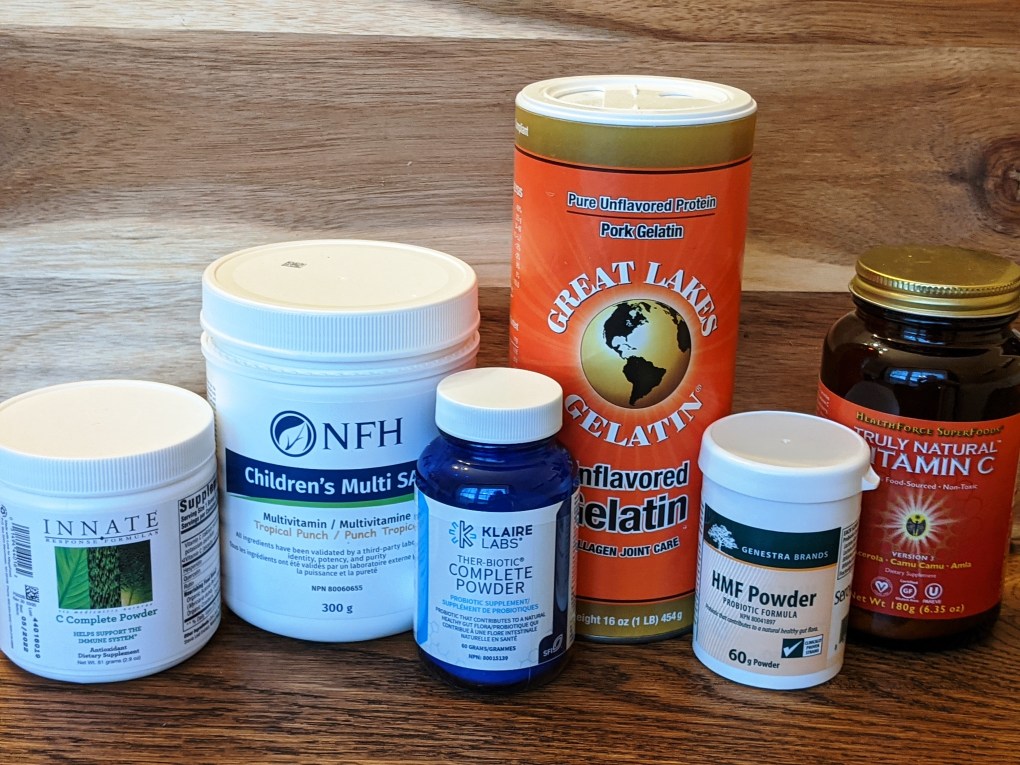
Unlike the electric red Jello jigglers you grew up on, these gelatin gummies contain an abundance of nourishing vitamins that you can dial up or down in this recipe depending on your nutritional needs.   Since these immune-boosting gut gummies are the ultimate in kid-friendly finger food, here are the supplements I have used to mix-and-match within my gummies.

Please note, in no way am I’m suggesting you use all of these at once; this is simply a guideline for some of the possibilities and options that you might consider and ones that have complimented the taste and flavor of this recipe! What you choose is up to you!

PXL_20210115_220341582.PORTRAIT

  • Innate Naturals Vitamin C Complete powder
  • NFH Children’s Multi SAP Powder (tropical punch)
  • Truly Natural Vitamin C Powder
  • Klaire Labs Ther-biotic Complete Powder
  • Genestra HMF Probiotic Powder

To know how much of these powdered supplements to add in your gut gummy recipe, follow the serving size on the label, and add between 2-4 servings of each. For example, if one serving of probiotic powder is 1/4 of a teaspoon, dissolve between 1/2 to 1 teaspoon of the powder into the cooled liquid.

PXL_20210115_220033608

Orange Dreamsicle Gut Gummies

  • Difficulty: Easy
  • Print

Ingredients

Orange Dreamsicle Gut Gummies

  • 1 1/2 cups orange juice
  • ½ cup full fat coconut milk
  • 3 heaping TBSP grass-fed, unflavored gelatin
  • 1 teaspoon vanilla

Optional Superfood Add-Ins:

  • Vitamin C powder
  • Children’s multi-vitamin powder
  • Probiotic powder
  • Ginger or turmeric

Directions

In a small saucepan, warm orange juice and coconut milk until heated through, but not boiling. Whisk in gelatin one tablespoon at a time, whisking constantly to make sure no clumps have formed before adding the next. Once gelatin is completely dissolved, add in vanilla and set aside to cool.

Once the gelatin has cooled to room temperature, add in your preferred superfoods, stirring until completely dissolved. It’s especially imperative that the gelatin has cooled before adding vitamin C or probiotics, as heat can damage both of these.

Pour gelatin liquid into candy molds or a glass baking dish before refrigerating. Refrigerate for around one hour or until completely set.

Photos and Content Copyright © Jaclyn Beaty Nutrition, 2021


Liver and Pears

High quality organ meats are one of the best foods to introduce to babies starting around 6 months. Chicken liver and beef liver purees were at the top of the list as my babies’ first foods. Now that my babies have sprouted toddler tastebuds, I’ve adapted the to include the sweetness of chunky, juicy pears. This is also an incredible way to introduce organ meats to someone who has never had them. The amount of sweetness is easily modifiable by adjusting the amount of pears you add.

Click to view my Babyfood Liver Pate recipe perfect for first foods starting at 6 months.

For more on why this is a perfect first food, read my article on 6-9 month feeding practices.

Chicken liver’s nutrient density wins in nearly every category but tops the charts for iron, zinc, and choline. It’s the most nutrient dense food your baby could eat, second to mother’s milk. Pears add a healthy dose of fiber along with vitamin C, which boosts the amount of iron that’s absorbed from liver…a true pair.

OLYMPUS DIGITAL CAMERA


I like to save a small jar in the refrigerator for immediate use, and then freeze the rest into mini-muffin molds and freeze along with the rest of my baby food stash.

Liver and Pears

  • Servings: 16, one ounce servings
  • Difficulty: Easy
  • Print

Ingredients

Liver and Pears

  • 1 lb high quality organic, free-range chicken livers
  • 1/4 cup bone broth, chicken broth, or water
  • 1 ripe organic pear, cut into chunks, divided (I prefer d-Anjou or Bartlett pears)

Directions

In a small saucepan, bring livers, broth, and HALF the pear chunks to boil, then reduce to simmer for 14-16 minutes, stirring occasionally. The juices from the pears will begin to seep and help add liquid and sweetness to the livers. Use an instant read thermometer to check the internal temp of the liver has reached 165 F. Transfer livers and pears to high-speed blender, and puree until creamy, whipped consistency is achieved. 

Scrape liver mixture into a medium bowl and mix in the remaining pear chunks so there are visible pear pieces within the liver pate. Reserve a single serving of liver and pears to use within 1-2 days, or transfer the remaining into silicone sections or muffin tins and freeze in small portions until ready to use.

Photos and Content Copyright © Jaclyn Beaty Nutrition, 2020


Summer’s Sweetest Superfoods

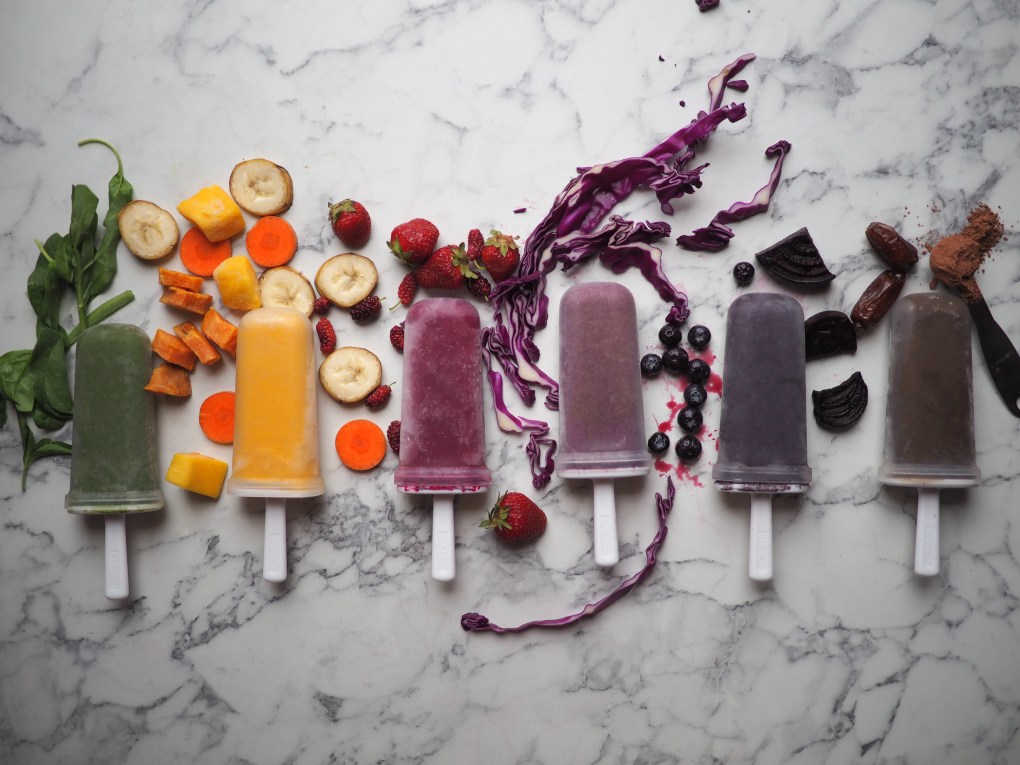
Anything in a popsicle shape is like contraband to my kids. Now that summer cranked up the heat, I’ve been stocking my freezer with popsicles made from left over smoothies. This is one of my sneakiest childhood nutrition tricks, and it takes zero additional prep time if you’re already in the habit of smoothie making.

  • Step 1) Make a smoothie
  • Step 2) Pour it into a popsicle mold

Don’t have popsicle molds? Grab some Dixie cups and wooden popsicle sticks and let them stand on a flat surface in the freezer to harden.

The best part of these treats is that they’re loaded with fiber, fat, and protein which is the holy trinity of fuel for little bodies. They get to choose which color they want, and even if they didn’t love the smoothie when first served at a breakfast, there’s no debating they will suddenly love it when it’s offered outside as a cool down treat.

OLYMPUS DIGITAL CAMERA

Since all my smoothie recipes contain at least one, if not more, vegetables, kids get a healthy dose of antioxidants and phytochemicals in a fun-to-eat snack. Below are the links to all my favorite smoothies along with their sneaky vegetables:

OLYMPUS DIGITAL CAMERA

Photos and Content Copyright © Jaclyn Beaty Nutrition, 2020


Carrot Zinger Smoothie

I rarely crave smoothies outside of breakfast time, but this is one exception. Some afternoons I need a flavorful pick-me-up, and this makes my cells sing. Because of this wild world we’re living in with a global pandemic and everyone on edge with their health, I developed a recipe that speaks directly to some immune supporting nutrients that may add protection against COVID.

OLYMPUS DIGITAL CAMERA

Food is medicine, and here is how it’s applied in the defense of COVID:

  • Turmeric- Turmeric contains curcumin, thought to be an herbal therapy against COVID. It is highly anti-inflammatory. When inflammation is down, the immune system is up. Its antimicrobial properties can target viral respiratory infections like bronchitis, influenza, and coughs….sound familiar, 2020? Turmeric also acts as a natural pain killer to help ease body aches from illness.
  • Ginger- This root is another anti-inflammatory spice that acts as an antimicrobial. Microbes can be either bacteria or viruses. COVID is a virus. Fresh ginger has been known as a remedy for RSV and bronchitis, both of which are also viruses (although bronchitis can also be bacterial). One study showed ginger may provide a therapeutic option alone for respiratory and airway conditions such as asthma.
  • Carrots– Carrots contain beta-carotene, a precursor to vitamin A. Your body burns through Vitamin A during times of illness (don’t believe me? test your night vision next time you’re sick!). Vitamin A is ONLY found in animal products. You may be thinking, “wait, I thought my canned pumpkin said 130% of vitamin A?” That label is assuming that under the perfect circumstances, with the perfect genetics, with the perfect nutritional mechanisms, you COULD convert the amount of Beta Carotene in that can of pumpkin into that much Vitamin A.  Most of our bodies aren’t walking around in a state of nutritional perfection though, so we aren’t getting what that label promises.  All the more reason to get daily sources of rich orange/yellow produce in the diet. Vitamin A is also a fat soluble vitamin, which is why I added:
  • Coconut Oil- This medium chain triglyceride is insta brain fuel and also helps bind to turmeric and vitamin A to help increase absorption and assimilation. Turmeric and vitamin A are both dependent on fat to help them get into the blood stream and work their magic. Coconut oil is another antimicrobial ingredient in this smoothie.
  • Oranges and lemon– Some countries are brilliantly using mega doses of intravenous vitamin C as a treatment for Coronavirus. While the modest amount of vitamin C in a few citrus fruits would be a small drop in the bucket compared to the massive dose of C that is actually proving to be treat the disease, the oranges and lemons in this smoothie will build a foundation for sustainable immune support.

OLYMPUS DIGITAL CAMERA

As with all smoothies, add the hardest/most dense ingredients at the top for the most efficient blending (frozen fruits, ice cubes, or in this case, raw carrots). Liquids always go at the bottom.

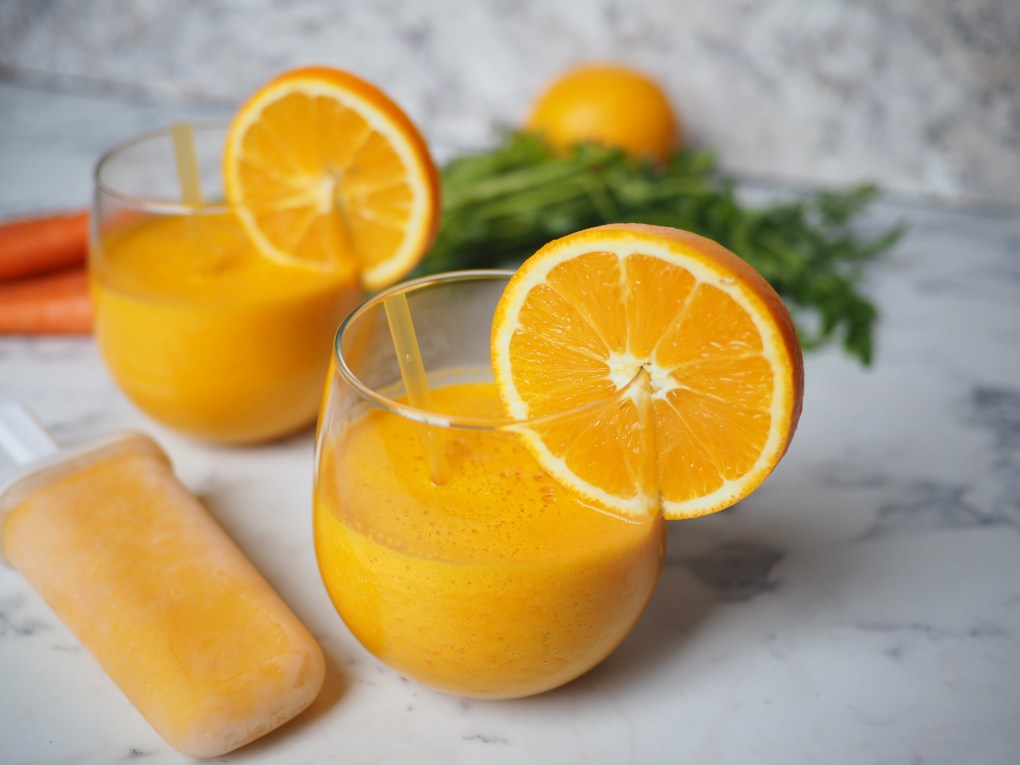
Any left overs can be made into popsicles as a standby for if you end up coming down with a fever or sore throat and don’t have much of an appetite. Or, you could always enjoy your popsicle in perfectly good health and dream of sunshine on a island, because we could all use a tropical escape right about now too!

Carrot Zinger Smoothie

  • Servings: Four, 8oz servings
  • Difficulty: Easy
  • Print

Ingredients

Carrot Zinger Smoothie

  • 1 1/2 cups non-dairy liquid of choice (coconut milk, coconut water, almond milk, etc)
  • 2 large oranges, peeled, or 4 small clementines/Cuties
  • 1 lemon, peeled
  • 2 Tbsp coconut oil
  • 2-3 Tbsp seeds of choice (hemp hearts, chia seeds, or flaxseeds)
  • 1 teaspoon ginger (or less if you want a little less zing to your zinger)
  • 1 teaspoons turmeric (or less if you’re building up an acquired taste!)
  • 2 medium carrots, peeled and cut into 1-2″ pieces

Optional: add a scoop of collagen powder, bone broth protein powder, protein powder of your choice. I don’t use protein powders with my kids, so we’ve settled on protein coming from the hemp seeds in the recipe above.

Directions

Add all ingredients in the order given and blend in high-speed blender. Remember all frozen or firm ingredients should always go last into your blender for the best blending.

Refrigerate left overs in sealed glass jars for up to 3 days or freeze for up to 3-6 months in popsicle molds or glass mason jars.

Photos and Content Copyright © Jaclyn Beaty Nutrition, 2020


Molasses Spice Cookies

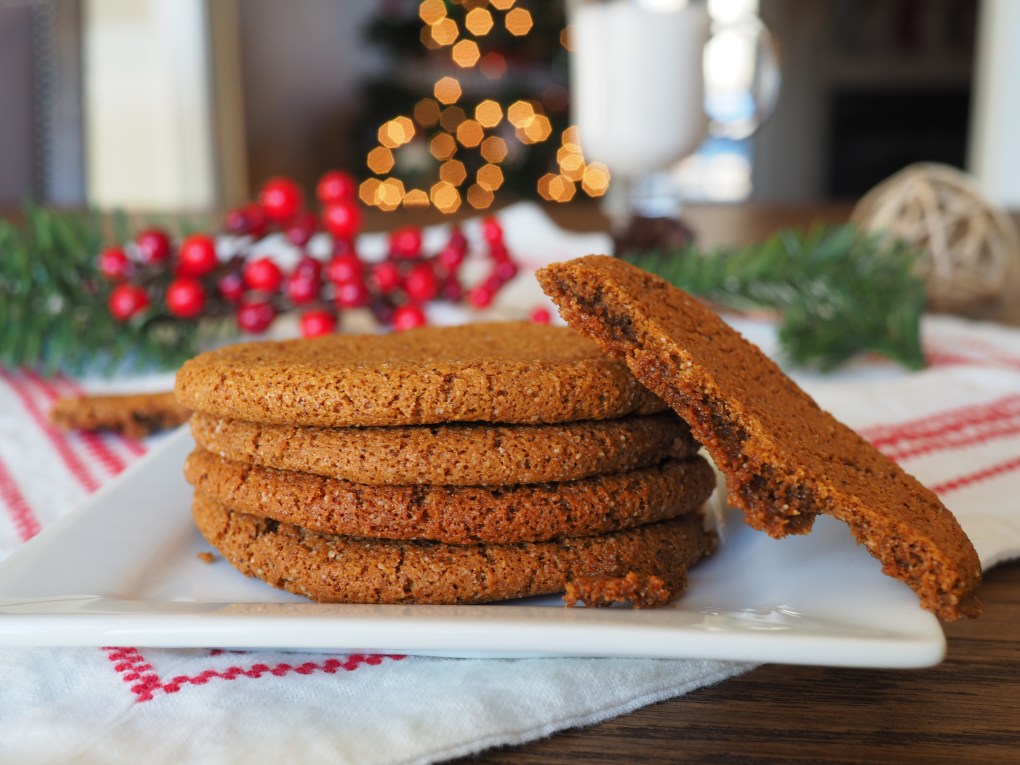
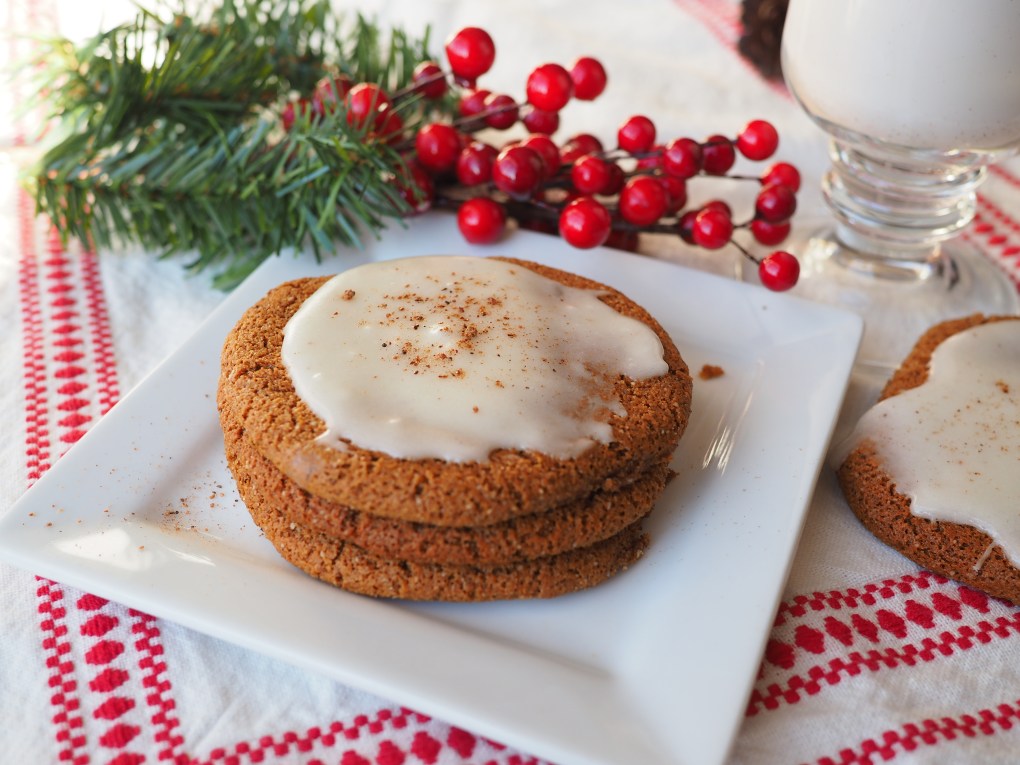
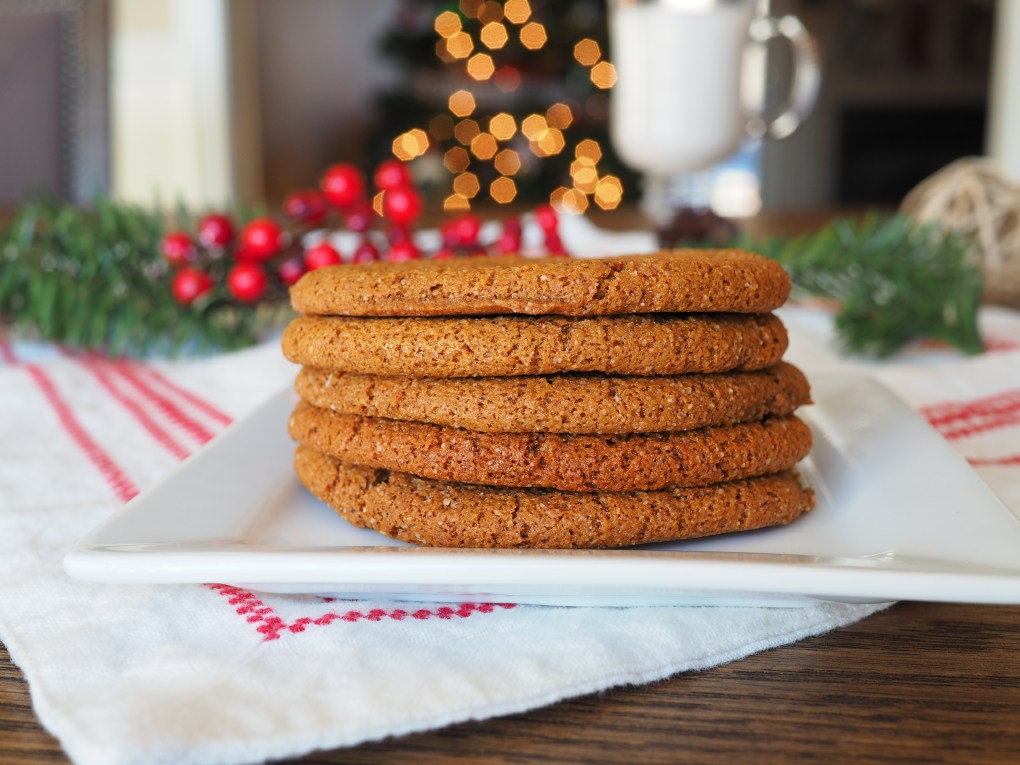
Iron-rich molasses, heaps of anti-inflammatory spices, and protein from almond butter make this cookie a reasonable, yet sweet, holiday treat. Growing up, my mom’s famous molasses cookies were an unspoken part of every Christmas. This recipe was an easy one to re-invent, using my Sneaky Snickerdoodles as a starting point, simply swapping out the maple syrup for molasses and tossing in a few more spices. The result is crispy on the outside, gooey on the inside, and now a new part of my Christmas!

OLYMPUS DIGITAL CAMERA

Although molasses isn’t considered a refined sugar or among the “white devils” it still contributes a fair amount of sugar in these cookies. They are sweet enough without frosting, but if you are serving these to anyone with a hole in their sweet tooth, this egg nog buttercream frosting is a delicious addition. These no longer keep the cookie dairy-free or refined sugar-free, but it does make it look festive!

OLYMPUS DIGITAL CAMERA

Egg Nog Buttercream Frosting (Optional)

  • 1/4 cup butter, melted
  • 2 cups powered sugar
  • 2 teaspoons egg nog
  • Dash nutmeg

Mix all together in a mixer until sugar is dissolved and frosting looks glossy. Spread a thin even layer on top of cookies and sprinkle a dusting of nutmeg to decorate.

Molasses Spice Cookies

  • Servings: 18 cookies
  • Difficulty: Easy
  • Print

Ingredients

Molasses Spice Cookie Ingredients

  • 2 1/2 cups almond flour or almond meal
  • 3/4 cup molasses
  • 1/2 cup almond butter*
  • 2 teaspoons cinnamon
  • 1 teaspoon cloves
  • 1 teaspoon ground ginger
  • 1/2 teaspoon all-spice
  • 1 Tbsp coconut oil
  • 1 tsp baking soda
  • 1/2 tsp sea salt

*Runny almond butter is best! A jar is usually the runniest when newly opened. If you’re scraping the bottom of the barrel on your almond butter, add an additional 1-2 teaspoons of coconut oil to the recipe.

Directions

Preheat oven to 350 degrees and line a cookie sheet with parchment paper. In a large mixing bowl or stand mixer bowl, add all ingredients in the order given. Mix just until all ingredients are incorporated.

Scoop 1 inch round balls of dough onto prepared cookie sheet. You may choose to roll them in your hands or use a cookie dough scoop for more consistency. Using the bottom of a glass jar or cup, flatten the balls into round cookies, about 1/4″ thick.

Bake for approximately 10 minutes. If you like a gooier cookie, pull them out sooner, around 8 minutes. Transfer to a wire wrack to cool completely. Store them in a tightly sealed container for up to a week in the refrigerator or 3-6 months in the freezer.

Photos and Content Copyright © Jaclyn Beaty Nutrition, 2019


Orange Dreamsicle Smoothie

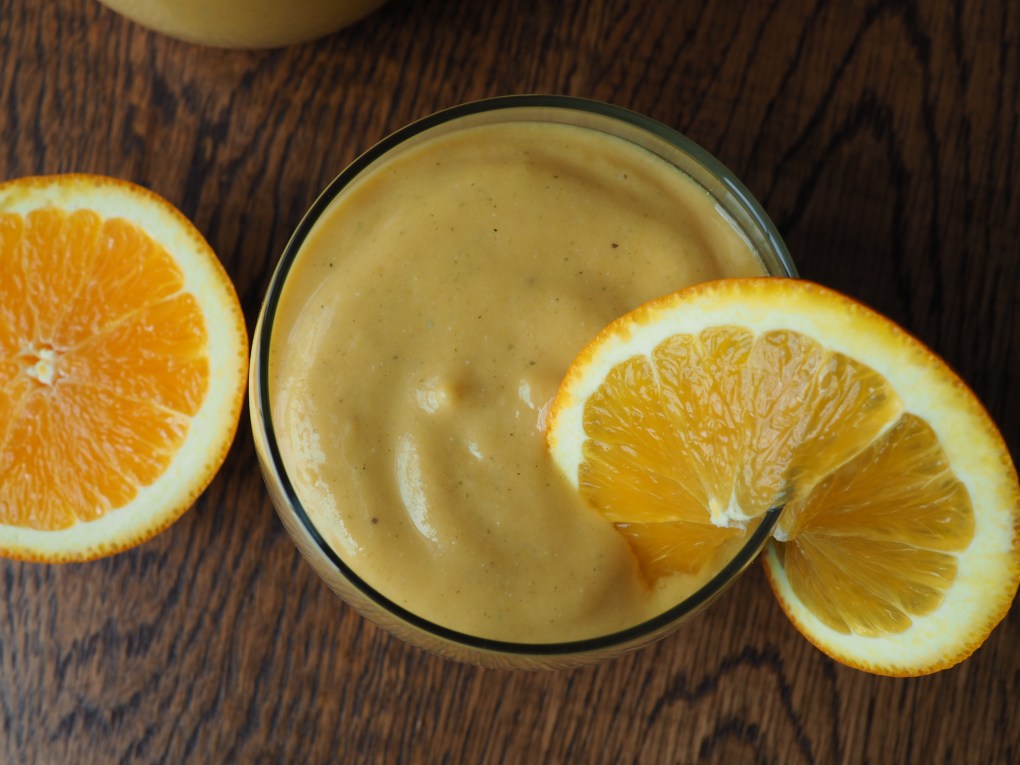
If I told you the truth that this smoothie was inspired by my daughter’s leftover frozen babyfood, promise me you won’t hit Back on your browser?  I had loads of left over frozen butternut squash puree that I threw into a smoothie one day. The result was creamy, flavorful, and glycemic-balanced with a flavor reminiscent of the Schwann’s man push pops from the 90s (are those still a thing?). To me, it’s not a smoothie if it doesn’t have a veggie. I’ve used both the butternut squash cubes from the natural foods freezer and the spirals found in the main freezer section. The mild taste of butternut squash blends right in to the creamy orange flavor, but I encourage you to experiment with your favorite brightly colored fruits and veggies:

Yellow/orange vegetables: butternut squash, acorn squash, pumpkin, sweet potatoes, carrots

Yellow/orange fruits: peaches, bananas, mangos, papaya, cantaloupe, oranges, clementines, pineapple, lemon

OLYMPUS DIGITAL CAMERA

Orange Dreamsicle Smoothie

Orange produce is usually loaded with Beta Carotene, a pre-courser to Vitamin A. Your body burns through Vitamin A during times of illness (don’t believe me? test your night vision next time you’re sick!). Vitamin A is ONLY found in animal products. You may be thinking, “wait, I thought my canned pumpkin said 130% of vitamin A?” That label is assuming that under the perfect circumstances, with the perfect genetics, with the perfect nutritional mechanisms, you COULD convert the amount of Beta Carotene in that can of pumpkin into that much Vitamin A.  Most of our bodies aren’t walking around in a state of nutritional perfection though, so we aren’t getting what that label promises.  All the more reason to get daily sources of rich orange/yellow produce in the diet.

Orange Dreamsicle Smoothie
  • Servings: Four, 8oz servings
  • Difficulty: Easy
  • Print

Ingredients

Orange Dreamsicle Smoothie

  • 1  cup non-dairy milk of choice (almond, coconut, or oat milk)
  • 1/2 cup orange juice (or 2 Tbsp of frozen OJ concentrate)
  • 2 large oranges, peeled, or 4 small clementines/Cuties
  • 2 ripe bananas
  • 1/2 teaspoon vanilla
  • 2 Tbsp coconut oil
  • 3 Tbsp seeds of choice (hemp hearts, chia seeds, or flaxseeds)
  • 1 cup cooked or frozen butternut squash
  • 1 cup frozen mangoes
  • Small handful of red raspberries (see note)**

Optional: add a scoop of collagen powder or this Vega Tropical Tango Smoothie powder for bonus protein. I don’t use protein powders with my kids, so we’ve settled on protein coming from the hemp seeds in the recipe above.

**Adding just a few raspberries enhances the color, taking it from a dull yellow to a bright orange. It’s an optional step, but an aesthetic one that helps picky eaters who eat with their eyes first. About 5-7 red raspberries is enough to do the trick!

Directions

Add all ingredients in the order given and blend! Remember all frozen food should always go last into your blender for the best blending.

Refrigerate left overs in sealed glass jars for up to 3 days or freeze for up to 3-6 months.

Photos and Content Copyright © Jaclyn Beaty Nutrition, 2019


Salmon Chowder

OLYMPUS DIGITAL CAMERA

OLYMPUS DIGITAL CAMERA

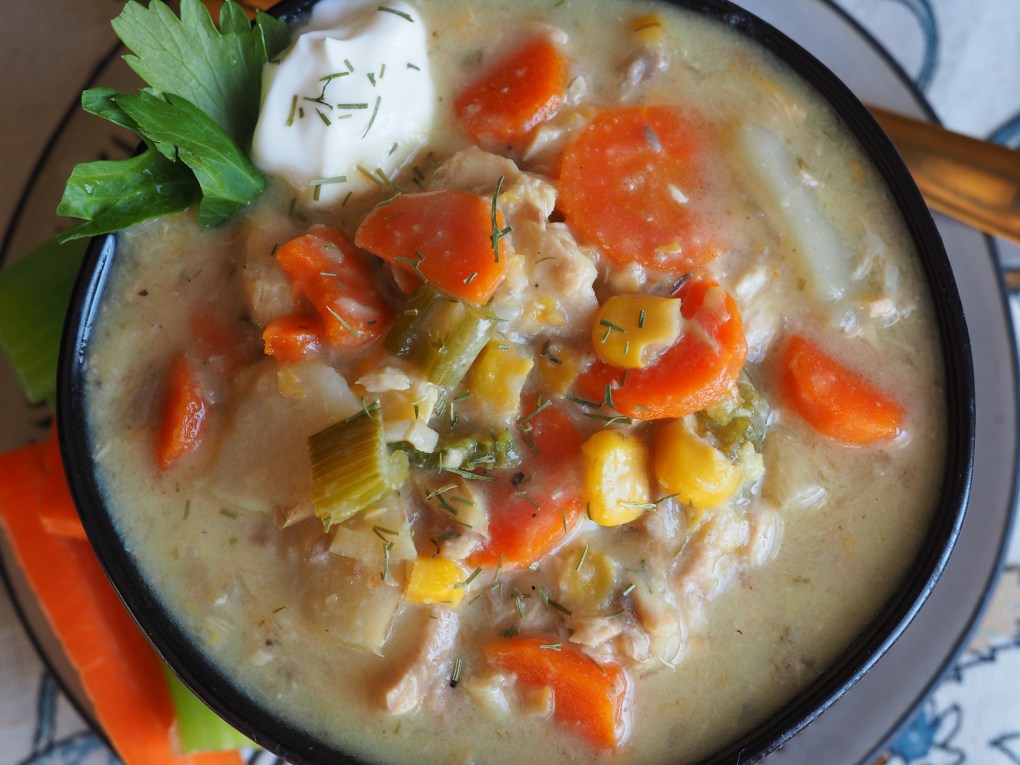
The first chill in the air means chowder on the stove. The is a perfect dinner for cold nights, and it makes a lot so we’re always able to invite an extra guest to our table. It’s creamy, flavorful, and hearty. Canned salmon can be replaced with fresh filet, however it’s so easy to find wild-caught Alaskan salmon on the shelves that it’s hard to pass up the convenience and cost of canned.

Salmon Chowder

  • Servings: 12 Servings
  • Difficulty: Easy
  • Print

Ingredients

Salmon Chowder

  • 3 Tablespoons olive oil
  • 1 cup chopped onion
  • 1/2 cup chopped celery
  • 3 garlic cloves, minced
  • 2 cups diced white potatoes
  • 3 carrots, diced
  • 3 cups chicken broth
  • 1 teaspoon salt
  • 1/2 teaspoon ground black pepper
  • 1 teaspoon dried dill weed
  • 2 (16 ounce) cans salmon, drained
  • 1 (15 ounce) can full-fat coconut milk
  • 1 (15 ounce) can creamed corn
  • Shredded cheddar cheese (optional, otherwise the chowder is dairy free)

Directions

Melt butter in a large pot or dutch oven over medium-high heat. Saute onion, celery, and garlic until translucent and tender. Stir in broth, potatoes, carrots, salt, pepper, and dill. Bring to a boil and reduce heat. Cover and simmer for 20 minutes.

Once potatoes and carrots are soft, stir in both cans of drained salmon, breaking apart large pieces. Add in coconut milk and creamed corn. Top with cheese if desired.

Serve with green salad and corn bread for a delicious filling winter dinner!

Photos and Content Copyright © Jaclyn Beaty Nutrition, 2019